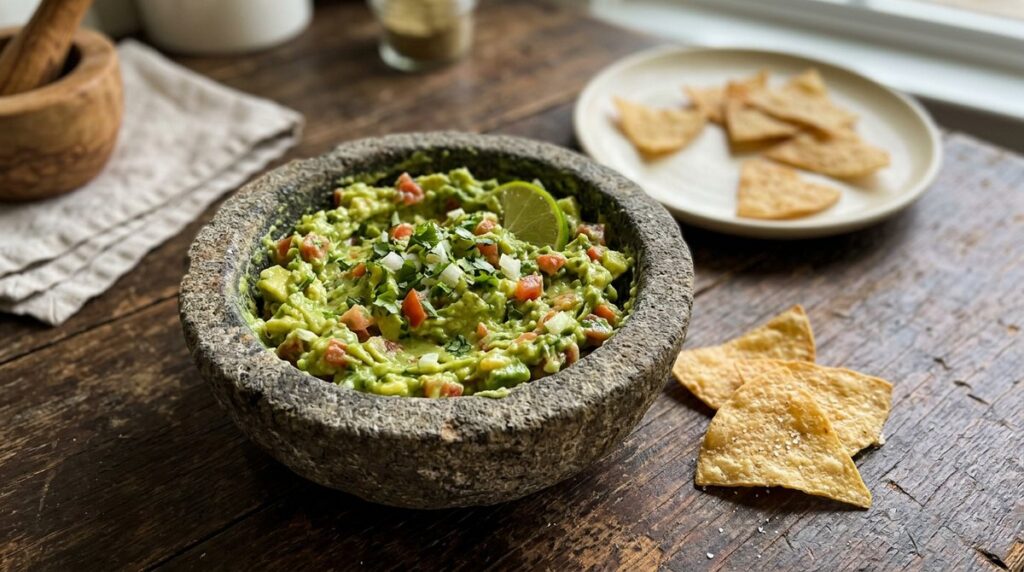
Great guacamole balances a creamy base with distinct, tender bites of fresh onion, tomato, and cilantro. This simple recipe uses a two-step method to build a flavorful foundation before folding in the chunky mix-ins. With just a few ripe avocados and a light hand, you will have a perfect bowl of guacamole in 15 minutes.
Why This Works
- Mashing aromatics directly into the avocado releases their juices and essential oils, infusing every bite with flavor instead of leaving raw, harsh bits.
- Adding lime juice and salt early seasons the base deeply and helps break down the avocado just enough for a creamy texture without over-mashing.
- Folding in the reserved diced tomato, onion, and cilantro at the end preserves their fresh texture and prevents the guacamole from becoming a uniform paste.
- Using a fork instead of a food processor gives you total control over the final consistency, from rustic-chunky to mostly smooth.
What You Need
- Large mixing bowl
- Fork or potato masher
- Sharp chef’s knife
- Cutting board
- Citrus juicer or your hands
- Measuring spoons
- Silicone spatula
Ingredients
- 3 medium ripe avocados [about 450 g]
- 1/4 cup [30 g] finely diced white onion, divided
- 1/4 cup [10 g] chopped fresh cilantro leaves, divided
- 1 to 2 serrano or jalapeño peppers, stemmed, seeded, and minced (adjust to taste)
- 2 tablespoons [30 ml] fresh lime juice, from about 1 lime, plus more to taste
- 1/2 teaspoon [3 g] kosher salt, plus more to taste
- 1 medium ripe Roma tomato, cored, seeded, and diced [about 1/2 cup or 75 g]
Instructions
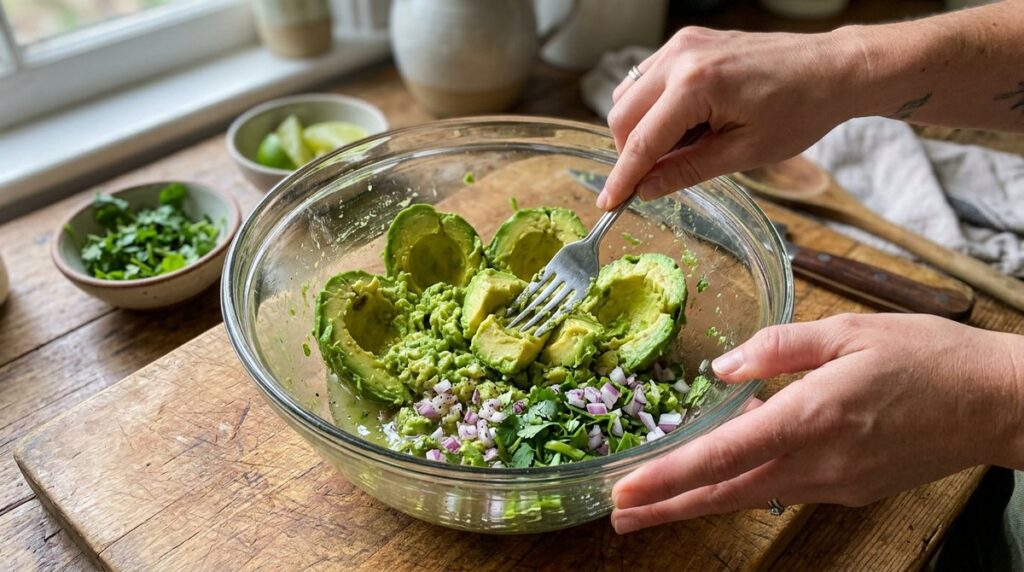
- Prepare the Aromatic Base. In a large mixing bowl, combine half of the diced onion (2 tablespoons), half of the chopped cilantro (2 tablespoons), all of the minced pepper, the lime juice, and the salt. Stir this mixture together and let it sit while you prepare the avocados. The lime juice will soften the harsh bite of the raw onion and pepper.
- Halve and Pit the Avocados. Cut each avocado in half lengthwise around the pit. Twist the halves apart. Place the half with the pit on your cutting board. Gently press the heel of your chef’s knife into the pit, twist, and lift it out safely. Use a spoon to scoop the flesh into the bowl with the onion-lime mixture. Discard the skins.
- Mash to Your Desired Creaminess. Using a fork or a potato masher, mash the avocados directly into the aromatic base. Mash to your preferred consistency. For a chunky guacamole, leave some larger pieces. For a creamier texture, mash more thoroughly. Do not overwork it; you can always mash more, but you can’t add texture back.
- Season and Taste the Base. Give the mashed avocado mixture a thorough stir to distribute the seasonings. Taste it now, before adding the chunky mix-ins. This is your base flavor. Adjust with an extra pinch of salt or a squeeze of lime juice. The flavor should be bright and well-salted, as the remaining ingredients will mellow it out.
- Prepare the Chunky Mix-Ins. Ensure your diced tomato is drained of excess seeds and watery pulp to prevent a watery dip. Have your reserved diced onion and chopped cilantro ready. The tomato should be in small, neat dice, about the size of a small pea, so it integrates without dominating a single chip scoop.
- Fold in the Remaining Ingredients. Add the diced tomato and the reserved diced onion and chopped cilantro to the bowl. Using a silicone spatula, gently fold everything together just until evenly distributed. Use a light hand and stop as soon as the streaks of tomato and herbs are mixed in. Over-stirring will crush the tomato and make the guacamole muddy.
- Final Taste and Serve Immediately. Give the finished guacamole one final taste. The flavors should be bright, and the salt level should make the avocado taste rich and nutty. Adjust if needed. Guacamole is best served right away. Transfer it to a serving bowl and enjoy with warm store-bought tortilla chips.
Tips for the Best Results
- Pick perfectly ripe avocados: They should yield to gentle pressure, like pressing the palm of your hand, but not feel mushy. Avoid rock-hard ones; they will never become creamy.
- Seed the tomatoes: The jelly-like seed pockets add unwanted water. After dicing, let the tomato pieces drain on a paper towel for a minute to keep your guac thick.
- Adjust heat thoughtfully: Start with half a pepper. You can always stir in more minced pepper at the end, but you can’t take the heat out. Remove all seeds and white membranes for a milder flavor.
- Use kosher salt: Its flaky texture dissolves easily and seasons more evenly than fine table salt. A generous amount is critical to bring out the avocado’s richness.
- Lime juice is for flavor and color: The acid slows browning, but it’s primarily there to make the dip sing. Don’t rely on it alone to keep the dip perfectly green.
- Serve at room temperature: Cold mutes flavor. If your avocados were refrigerated, let the finished guacamole sit for 10 minutes before serving so the flavors can fully develop.
Troubleshooting
Guacamole is bland and flat
This almost always means not enough salt or acid. Stir in another generous pinch of kosher salt and a teaspoon of lime juice, then taste again. The flavors should pop.
Dip turned watery after adding tomato
The tomato released its liquid. Next time, seed the tomato and drain the dice on paper towels. To fix the current batch, carefully tilt the bowl and spoon off any pooled water, then stir gently.
Texture is a uniform paste
The ingredients were over-mashed or stirred too aggressively. There’s no way to add chunkiness back. Serve it as-is and next time, mash the avocado alone first, then fold in all mix-ins by hand.
Onion flavor is too harsh
Raw onion can be overpowering. Fix this by letting the diced onion sit in the lime juice for 10 minutes before adding the avocado. This quick-pickles the onion and mellows its bite.
Storing and Re-Crisping
To store leftovers, press a piece of plastic wrap directly onto the surface of the guacamole, smoothing out any air pockets. Then seal the bowl with a second layer of wrap or a tight-fitting lid. Cool and refrigerate leftovers within 2 hours, and keep for up to 2 days. Some light browning on the very top is normal; simply scrape off the thin discolored layer to reveal the bright green dip beneath.
Variations to Try
- Roasted Poblano and Corn: Fold in 1/4 cup [40 g] of roasted corn kernels and 2 tablespoons [15 g] of finely diced roasted poblano pepper for a smoky, sweet twist.
- Tropical Fruit Guacamole: Gently fold in 1/3 cup [50 g] of small-diced mango or pineapple and a pinch of chili powder for a sweet-and-savory version.
- Bacon and Cotija: Stir in 1/4 cup [30 g] of crumbled cooked bacon and 2 tablespoons [15 g] of crumbled cotija cheese just before serving for a salty, crunchy, savory dip.
- Herb-Loaded: Replace the cilantro with a mix of fresh chives and flat-leaf parsley, adding a teaspoon of grated lime zest for a brighter, less traditional herbal flavor.
- Spicy Chipotle: Omit the fresh pepper and instead stir in 1 to 2 minced chipotle peppers in adobo sauce, plus a tiny spoonful of the sauce, for a deep, smoky heat.
Frequently Asked Questions
How do I pick a ripe avocado for guacamole?
Ignore the color and focus on feel. A ripe avocado yields to gentle pressure without feeling mushy or hollow. If you pop off the small stem nub and it’s green underneath, it’s good. If it’s brown, the avocado is likely overripe and may have dark spots inside.
My guacamole always turns brown. How can I stop it?
Oxidation from air exposure causes browning. The most effective method is to press plastic wrap directly onto the surface of the dip to create an airtight seal. A thin layer of water or a squeeze of extra lime juice on top before wrapping also helps, though you’ll need to pour or scrape it off before serving.
Can I make guacamole ahead of time for a party?
You can prep all the mix-ins up to a day ahead. Dice the onion, tomato, and pepper, and store them separately in the fridge. Chop the cilantro and juice the lime. When you’re ready to serve, cut and mash the avocados and assemble the guacamole. It takes just minutes with the prep work done.
Is it okay to use a food processor or blender?
We don’t recommend it. Blades spin too fast and will over-process the avocado, releasing its starches and creating a gummy, whipped texture rather than a creamy, chunky one. A fork gives you the best control and the ideal rustic texture.
What’s the best onion to use?
White onion is the classic choice for its sharp, clean bite that cuts through the richness of the avocado. Red onion works well for a slightly milder, sweeter flavor and a pop of color. Yellow onion is usually too harsh when raw and can overpower the other flavors.
How can I fix a guacamole that’s too spicy?
The heat from chiles is concentrated, so the best fix is to dilute it. Mash in another half or whole avocado to expand the volume. You’ll need to re-season with salt and lime juice. Alternatively, folding in a generous spoonful of sour cream can help cool the burn while adding a tangy richness.