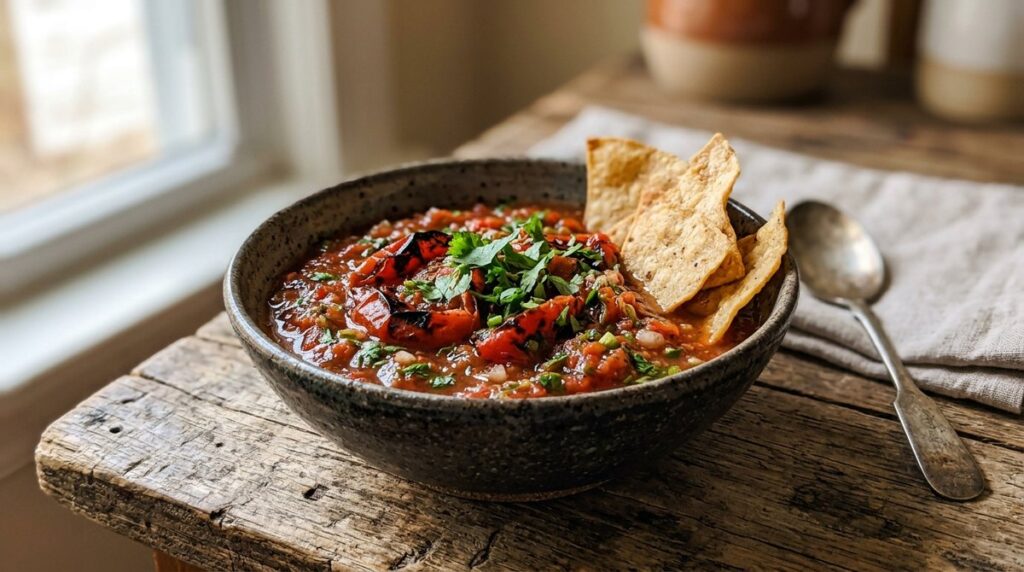
Roasting tomatoes, peppers, and garlic on a sheet pan coaxes out a deep, smoky sweetness that raw ingredients cannot match.
This easy blender salsa comes together in under an hour and pairs perfectly with chips, tacos, or eggs.
You can easily customize the heat and texture to suit your taste.
Why This Works
- Dry oven heat caramelizes the natural sugars in tomatoes and onion, creating a sweet, rich base.
- Blistering the pepper skins adds a subtle smokiness you can’t get from fresh or canned ingredients.
- Roasting garlic whole in its papery skin turns it soft, mellow, and spreadable without any harsh raw bite.
- Blending the warm roasted vegetables with cold fresh lime juice and cilantro keeps the salsa bright and balanced.
- One-pan roasting means easy cleanup and hands-off cooking while you prep the rest of your meal.
What You Need
- Rimmed baking sheet
- Parchment paper or silicone mat (optional, for easier cleanup)
- Chef’s knife and cutting board
- Blender or food processor
- Measuring spoons
- Spatula
- Airtight container for storage
Ingredients
- 1 1/2 lb [680 g] ripe Roma or plum tomatoes, halved lengthwise
- 2 jalapeño or serrano peppers, stems removed, halved lengthwise
- 1 small [about 6 oz / 170 g] white or yellow onion, peeled and cut into 1-inch wedges
- 3 cloves garlic, unpeeled
- 2 tablespoons neutral oil (such as vegetable or canola oil)
- 1 teaspoon fine sea salt, plus more to taste
- 1/2 teaspoon ground cumin
- 2 tablespoons fresh lime juice (from about 1 lime)
- 1/4 cup [packed] fresh cilantro leaves and tender stems, roughly chopped
Instructions
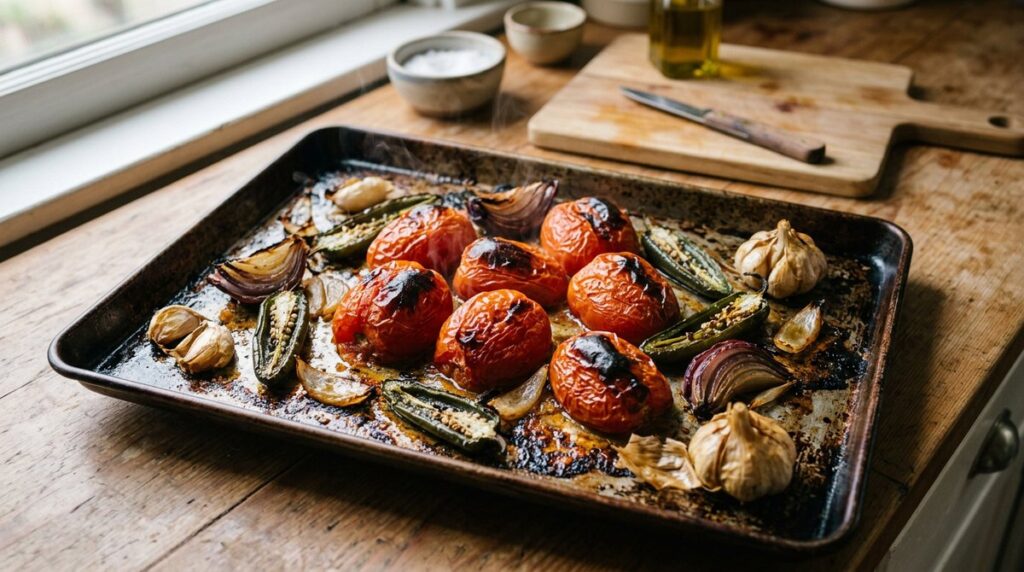
- Preheat the oven. Set an oven rack about 6 inches [15 cm] below the broiler element and preheat the oven to 425°F [220°C]. Line a rimmed baking sheet with parchment paper for easier cleanup if you like.
- Prep the vegetables. Halve the tomatoes lengthwise and place them cut-side up on the baking sheet. Halve the peppers and remove the stems; leave the seeds and membranes for more heat or scrape them out for milder salsa. Cut the onion into wedges and scatter them around the tomatoes. Tuck the unpeeled garlic cloves among the vegetables.
- Season and roast. Drizzle the oil over everything and sprinkle with the salt and cumin. Use your hands or a spatula to toss gently, then spread the vegetables back into a single layer, tomatoes still cut-side up. Roast for 25 to 30 minutes, until the tomato skins are wrinkled and beginning to char in spots, the onion edges are browned, and the peppers are soft and blistered.
- Broil for extra char (optional). For deeper smokiness, switch the oven to broil on high for the last 2 to 3 minutes. Watch closely so the vegetables char but do not burn. Remove the pan from the oven.
- Cool slightly and peel the garlic. Let the vegetables cool on the pan for about 10 minutes. When the garlic is cool enough to handle, squeeze the soft roasted cloves out of their skins. Discard the skins.
- Blend the salsa. Transfer all the roasted vegetables and any juices from the pan to a blender or food processor. Add the lime juice and cilantro. Pulse in short bursts until the salsa reaches your preferred texture—about 8 to 10 pulses for a chunky salsa, or blend continuously for a smoother one. Taste and add more salt or lime juice if needed.
- Adjust consistency. If the salsa is thicker than you like, stir in a tablespoon or two of cold water until it reaches the right spoonable consistency. Remember it will thicken slightly as it cools.
- Cool and serve. Pour the salsa into a serving bowl and let it cool to room temperature, or refrigerate for about 30 minutes if you prefer it chilled. Serve with warm tortilla chips.
Tips for the Best Results
- Use Roma or plum tomatoes—they have less water and more flesh, so the salsa won’t be watery.
- For a smokier flavor without broiling, add 1/2 teaspoon of chipotle powder or one chopped chipotle pepper in adobo sauce during blending.
- Wear gloves or wash your hands immediately after handling hot peppers to avoid irritation.
- If you like a thinner, restaurant-style salsa, add a splash of water or extra lime juice while blending.
- Toast the cumin in a dry skillet for 30 seconds before adding it to the pan—it deepens the earthy warmth.
- Let the salsa sit for at least 20 minutes before serving so the flavors can meld.
Troubleshooting
Salsa is too watery
You may have used very juicy tomatoes. Next time, after halving, gently squeeze out some seeds and watery pulp before roasting. For this batch, drain off a little liquid or blend in a few extra roasted tomato pieces.
Salsa tastes flat or lacks smokiness
Make sure you roast until you see real char spots. A quick broil at the end helps. You can also stir in a pinch of smoked paprika or a spoonful of adobo sauce from canned chipotles.
Salsa is too spicy
Add more roasted tomato, a tiny pinch of sugar, or a splash of lime juice to balance the heat. Next time, remove all seeds and membranes from the peppers before roasting.
Salsa is too thick and pasty
Blend in a tablespoon of cold water at a time until it loosens up. The salsa should spoon easily but still hold its shape on a chip.
Storing and Re-Crisping
Store cooled salsa in an airtight container in the refrigerator for up to 5 days. Always cool leftovers within 2 hours of cooking. The flavor often improves on the second day. Stir before serving as some liquid may separate. This salsa does not freeze well because the texture of the tomatoes and cilantro changes; it is best made fresh.
Variations to Try
- Fire-roasted green salsa: Use tomatillos instead of tomatoes and poblano peppers instead of jalapeños. Roast the same way for a tangy, smoky salsa verde.
- Chunky pico-style: After roasting, dice the vegetables by hand instead of blending. Toss with lime, cilantro, and a little fresh diced onion for a roasted pico de gallo.
- Chipotle-black bean salsa: Stir in a rinsed can of black beans and a minced chipotle pepper in adobo after blending for a heartier dip.
- Fruity twist: Add a halved, roasted peach or mango to the blender for a sweet-smoky balance that pairs beautifully with grilled chicken or fish.
- Extra garlicky: Roast an extra head of garlic alongside the vegetables and squeeze all the cloves into the blender for a mellow, roasted-garlic-forward salsa.
Frequently Asked Questions
Do I need to peel the tomatoes after roasting?
No, the skins soften during roasting and blend right into the salsa. If you prefer a completely smooth texture, you can pull off any large charred pieces of skin after roasting, but it is not necessary.
Can I make this salsa without a blender?
Yes. After roasting, finely chop all the vegetables by hand on a cutting board. Transfer to a bowl, add lime juice and cilantro, and stir. You will get a chunkier, more rustic texture.
How can I make the salsa milder for kids?
Use a mild pepper like a small poblano or even a quarter of a green bell pepper instead of jalapeño. Remove all seeds and membranes before roasting. The salsa will still have plenty of flavor from the roasted tomatoes and garlic.
Can I roast the vegetables on a grill instead?
Absolutely. Place the tomatoes, peppers, onion, and garlic on a grill-safe pan or directly on the grates over medium-high heat. Turn occasionally until charred and softened, about 10 to 15 minutes. Then proceed with the recipe.
Why does my salsa taste bitter?
Bitterness can come from over-charring the garlic or peppers, or from using underripe tomatoes. Next time, watch the broil step carefully and use fully ripe, deep-red tomatoes. A pinch of sugar or a little extra lime juice can help balance a slightly bitter batch.
Can I use canned tomatoes instead of fresh?
This recipe relies on fresh tomatoes to get those charred, blistered edges. Canned tomatoes contain too much liquid and will not roast properly on a sheet pan.